Why Vision Models Don't Need CLIP: Building Smarter VLMs from Text-Only LLMs

Your Vision-Language Model Doesn't Need CLIP
TL;DR — Researchers built a competitive vision-language model by starting with a text-only language model for the vision encoder instead of the usual CLIP approach, proving that bigger models aren't always the answer to better performance.
What It Is
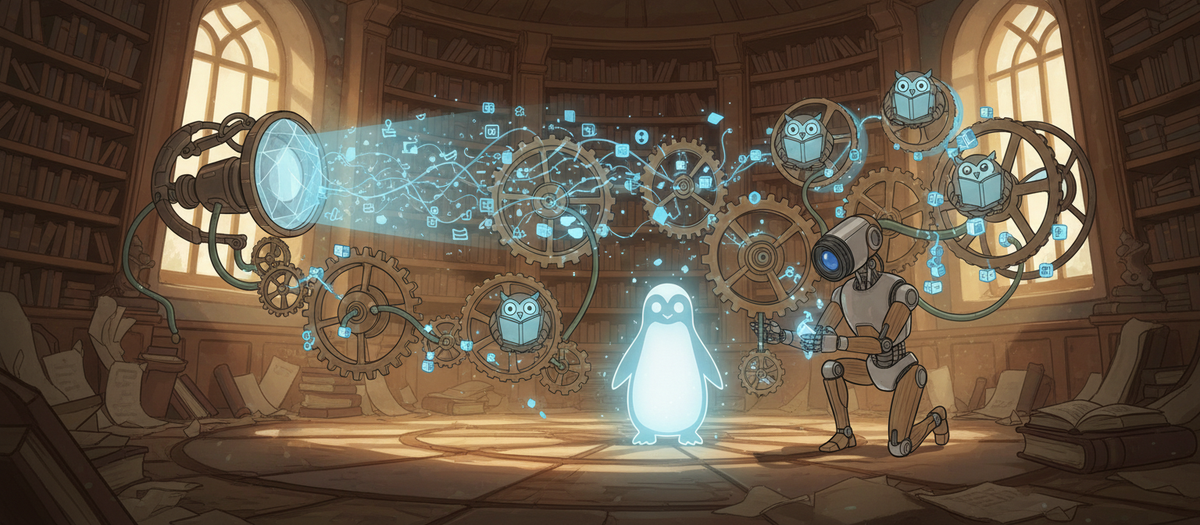
Almost every modern vision-language model (VLM) — systems that can understand both images and text — uses a vision encoder trained with "contrastive learning." That's where the model learns to match images with captions by distinguishing "dog" from "cat" at a category level. The Penguin-VL team asked: what if we skip that entirely and instead start with a language model that's never seen an image?
Their 2B and 8B parameter models outperform competitors on document understanding, video analysis, and visual knowledge tasks while matching them on math reasoning. The key insight: contrastive learning optimizes for coarse distinctions (is this a dog or a cat?) but throws away fine-grained details (what's the third word in this document?) that matter for real VLM tasks.
Why It Matters
- Deployment gets easier: Smaller models that perform as well as larger ones mean you can actually run these on phones, robots, or edge devices without burning through compute budgets
- Better performance where it counts: If your use case involves reading documents, analyzing charts, or understanding video sequences, the architectural choice of your vision encoder matters more than you think
- Rethink your stack: The "CLIP encoder + language model" pattern isn't gospel — there's room to experiment with vision encoders initialized from language models, especially if you're building specialized applications
One Thing to Try
If you're building a VLM for a specific domain (medical imaging, industrial inspection, document processing), consider whether your vision encoder's pretraining actually aligns with your task. A vision encoder trained to distinguish categories might be actively harmful if you need to preserve fine spatial details or subtle visual differences.